Texts & Scriptures
The Daodejing (Tao Te Ching)
The foundational text of Taoism, traditionally attributed to Laozi. Eighty-one short poems on the nature of the Way (Tao), its manifestations (Te/virtue), and the principle of non-action (wu wei). The text has been read as mystical philosophy, political counsel, and personal cultivation guide across two thousand years.
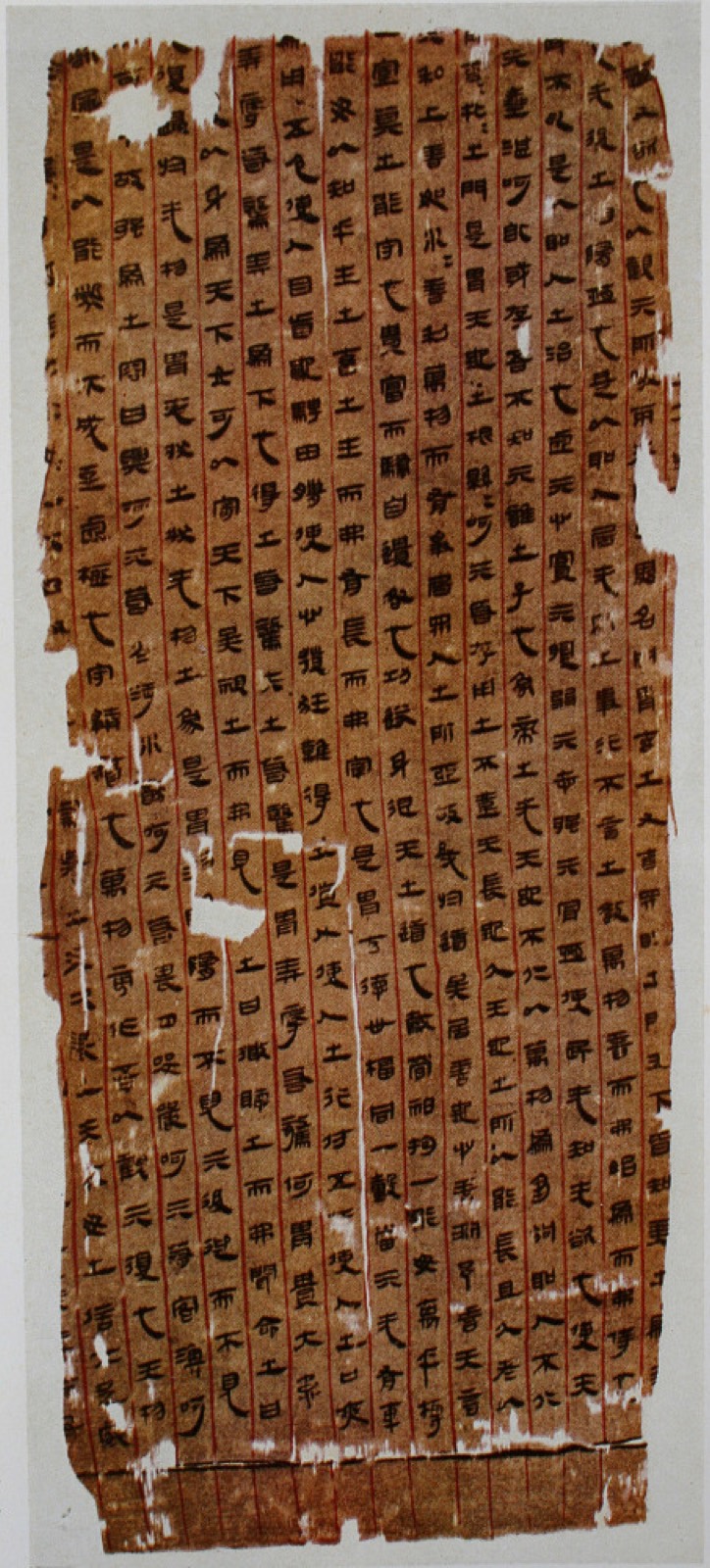
The Daodejing stands as one of humanity's most influential philosophical texts, with layers of meaning that have rewarded contemplation for millennia.
Structure and the Paradox of Language
The text opens with its central paradox: "The Tao that can be spoken is not the eternal Tao; the name that can be named is not the eternal name." Immediately the text establishes that its own words are inadequate to the task of pointing toward reality. This is not a limitation of the text but its genius—it trains the reader to move beyond conceptual thinking.
The text divides into 81 brief poems grouped roughly into two sections: the Tao (chapters 1-37) and Te (chapters 38-81). This division represents the unmanifest principle and its manifestation in the world.
The Three Core Concepts
The Tao (道): The Way, the principle underlying all existence. Not a being or creator but the fundamental nature of reality—both empty and pregnant with infinite potential. The Tao is:
- Beyond description and naming
- The source from which all things emerge
- Self-evident once perceived directly
- Characterized by constancy (changelessness within change)
- Wu (emptiness) as its primary quality
Te (德): Virtue in the sense of authentic power or presence. Not moral virtue but the way each thing naturally expresses its deepest nature when not forced or constrained. The text teaches that true power comes from alignment with the Tao, not from force or domination.
Wu Wei (無為): Non-action, non-forcing, effortless action. Not passivity but action aligned with the natural grain of things. Like water flowing downhill without struggle, like a tree growing without effort. The sage acts by not acting, wins by not competing, leads by not leading.
Key Teachings
Reversal as Principle: Chapter 15 teaches that "the ancient masters were subtle, mysterious, profound, responsive. The depth of their knowledge is unfathomable." All great accomplishment appears to move backward: to become whole, bend yourself; to become straight, curve; to become filled, empty yourself; to become worn, make yourself new.
Simplicity and Sufficiency: The uncarved block (pu) represents the original state before conditioning. Society divides people from their nature through language and hierarchy. Return to the uncarved block and simplicity.
Non-competition: "Do nothing and nothing remains undone." By not competing for position or resources, one becomes untouchable. The weak overcome the strong through yielding.
Historical Transmission and Interpretation
Early Taoist sects incorporated the Daodejing as scripture, revealing cosmic secrets in its lines. Confucian scholars mined it for political wisdom. When Buddhism entered China, Zen masters found in it a parallel to their own teachings about the limits of language.
Three main textual versions survive: the "received text," the Mawangdui silk manuscripts (2nd century BCE, with variant readings), and the Guodian bamboo slips (c. 300 BCE, the oldest known). These versions differ significantly in places, suggesting the text was evolving rather than fixed.
Application in Spiritual Practice
For contemplatives, the Daodejing functions as a koân—a paradoxical saying meant to jolt consciousness beyond conceptual thinking. Passages memorized and recited during meditation unfold their deeper meanings over years of practice. The text teaches not belief but direct insight into the nature of mind and reality.
Related
Where this connects.
Keep exploring
Return to the full directory, browse by texts & scriptures, or see how this shapes our own programs.