immortal Music, art, and the flute; the transformation of the natural world
Han Xiangzi
One of the Eight Immortals, traditionally identified as the grand-nephew of the celebrated Tang statesman-poet Han Yu, depicted carrying a flute whose music is said to make flowers bloom out of season and animate the natural world.
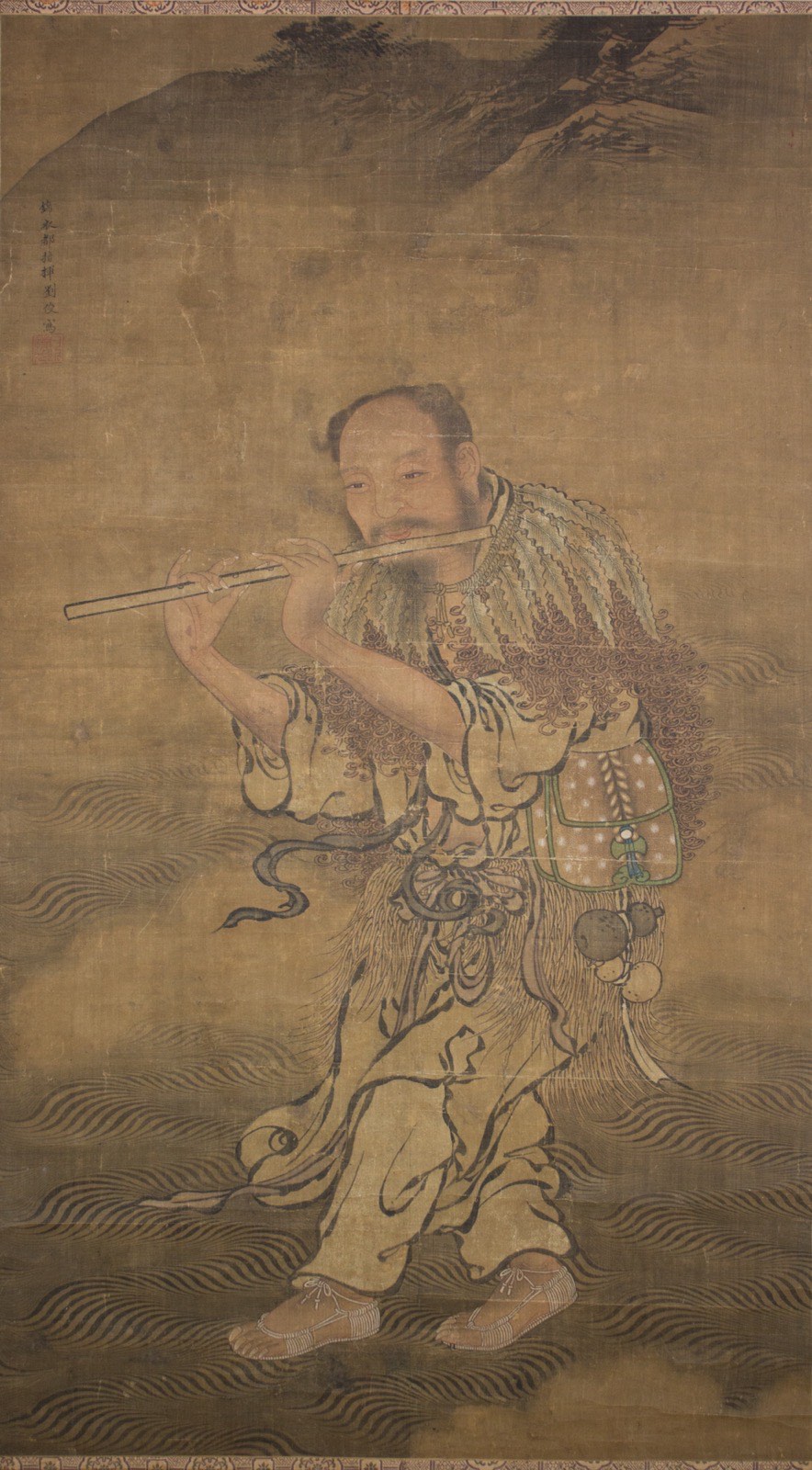
Han Xiangzi's story is framed as a family drama between Confucian and Taoist values. His great-uncle, Han Yu, was one of the most prominent Confucian officials and essayists of the Tang dynasty — famous, among other things, for a blistering memorial arguing against imperial veneration of a Buddhist relic, for which he was exiled. Han Xiangzi, by contrast, abandoned the examination-and-office path his family expected of him to study the Dao under Lü Dongbin and Han Zhongli, eventually attaining immortality — a rejection of exactly the Confucian civil-service ambition his great-uncle embodied.
Traditional tales describe Han Xiangzi demonstrating his attainment to his skeptical uncle through small miracles — most famously, causing rare flowers to bloom instantly out of season, with verses of poetry mysteriously appearing on their petals foretelling Han Yu's later exile. His constant attribute is a flute, and he is credited with the power to charm and transform the natural world through music — flowers blooming, plants growing, animals calming — making him the patron figure most associated, among the Eight Immortals, with music and artistic creation as a form of spiritual accomplishment rather than mere entertainment.
Iconography
A young scholar-immortal playing a Chinese flute (dizi), often shown with flowers blooming around him
Epithet
The Immortal Flautist
Back to the pantheon
Return to Pantheon, or read the concepts behind these figures.