immortal Medicine and healing; the poor and the afflicted
Li Tieguai (Iron-Crutch Li)
Traditionally counted first among the Eight Immortals, depicted as a lame, ragged beggar leaning on an iron crutch — his crippled, unglamorous body a deliberate statement that immortal attainment has nothing to do with worldly rank or appearance.
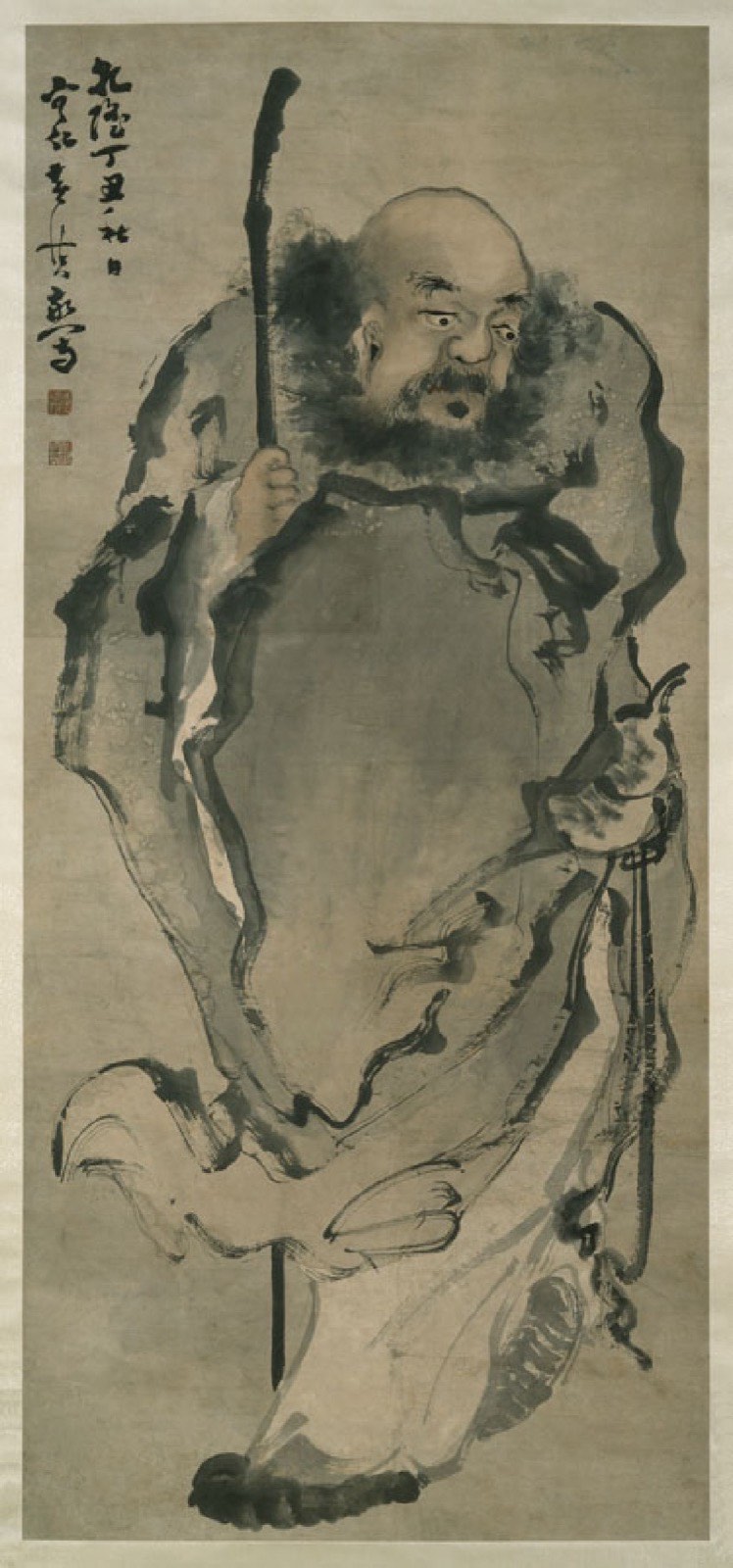
The story most often told of Li Tieguai involves a soul-projection accident: while his spirit traveled to the celestial realms to study with Laozi, leaving his body in his disciple's care, the disciple — believing days had passed with no sign of return, or called away by his mother's sudden illness — cremated the body. Li's spirit, returning to find no vessel to re-enter, was forced to inhabit the nearest available corpse: a lame, disfigured beggar who had just died. He emerged into the world in this new, crippled form, carrying an iron crutch and a gourd of medicine, and has been depicted this way ever since.
Unlike other immortals shown as elegant scholars or graceful maidens, Li Tieguai's iconography is deliberately unglamorous — filthy robes, a twisted leg, an unkempt beard — carrying the pointed teaching that spiritual attainment has nothing to do with physical beauty, social standing, or conventional dignity. He is associated with medicine (his gourd is said to dispense healing elixirs) and is particularly venerated by the poor, the disabled, and the marginalized, for whom his story offers a direct, unusually egalitarian promise: the body's condition says nothing about the spirit's attainment.
Iconography
A ragged, lame beggar leaning on an iron crutch, carrying a gourd from which smoke or a bat sometimes emerges
Epithet
The Immortal with the Iron Crutch
Back to the pantheon
Return to Pantheon, or read the concepts behind these figures.