founding figure Founding of Quanzhen monastic Taoism
Wang Chongyang
A 12th-century scholar-soldier turned ascetic who, after a series of visionary encounters, founded the Quanzhen school in Shandong and transmitted it to the "Seven Perfected," whose most consequential disciple, Qiu Chuji, established the Longmen lineage that still dominates Taoist monasticism today.
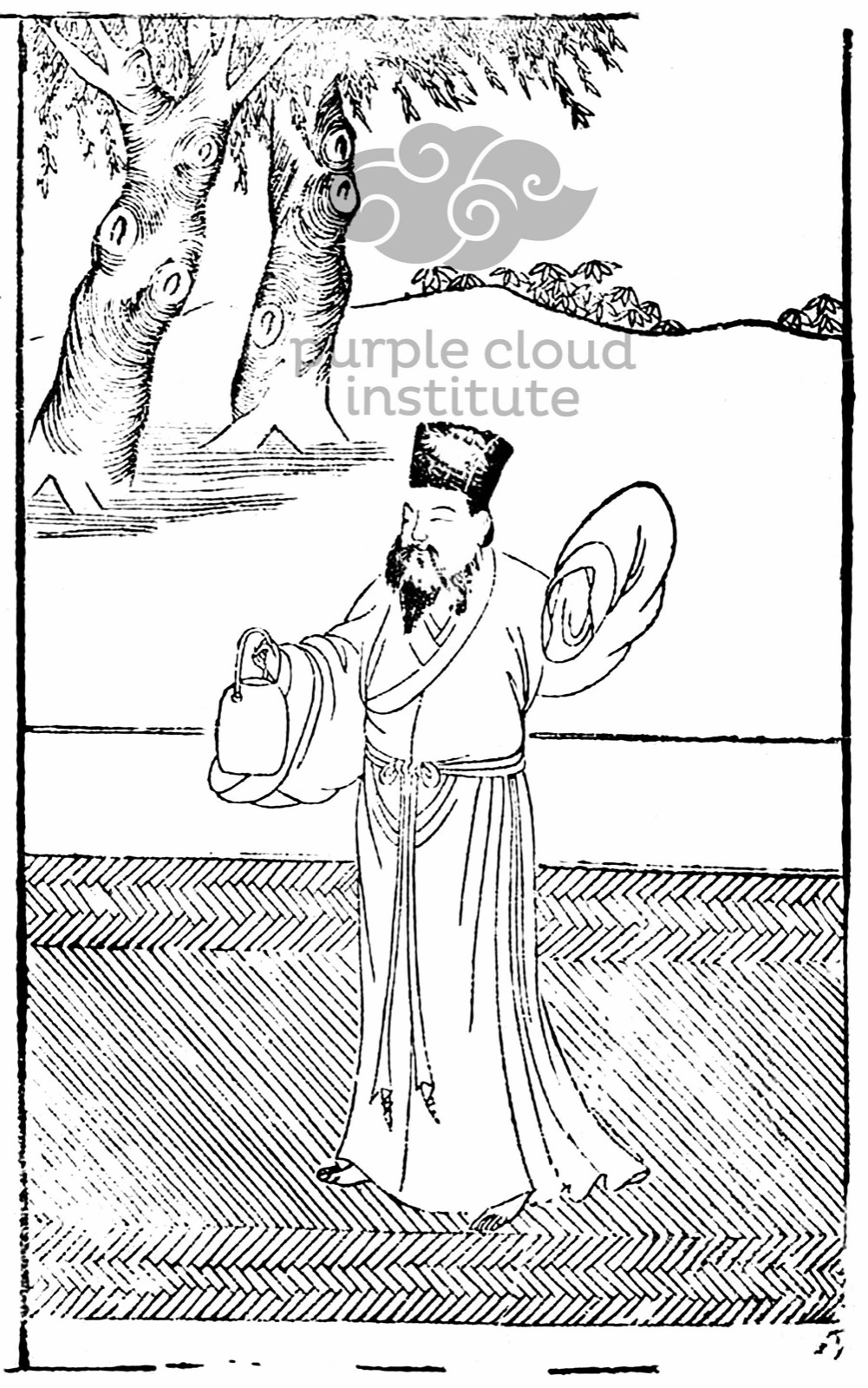
Wang Chongyang lived through the fall of northern China to the Jurchen Jin dynasty, and his early life — failed civil examinations, a minor military post, disillusionment — reads as the biography of a man for whom the existing paths to meaning had collapsed. Around 1159, by his own later account, he met two immortal transmitters of the Dao at a wayside inn (traditionally identified with Lü Dongbin, one of the Eight Immortals) and underwent a total conversion, digging himself a literal grave-like pit to live in for meditation before emerging to teach.
His system, Quanzhen ("Complete Perfection" or "Complete Reality"), was a deliberate synthesis: it took Taoist internal alchemy, the meditative discipline of Chan Buddhism, and Confucian ethical cultivation, and fused them into a single monastic path — celibate, communal, and rigorous — a significant departure from the ritual- and family-centered practice of the older Zhengyi tradition. He transmitted this teaching to seven principal disciples, the "Seven Perfected" (Qizhen), of whom Qiu Chuji went on to found the Longmen ("Dragon Gate") sub-lineage at what is now White Cloud Temple in Beijing after his famous 1219 audience with Genghis Khan. Quanzhen, through the Longmen branch specifically, is today the dominant form of monastic Taoist ordination in China.
Iconography
A Taoist monk in grey or blue robes, often depicted in meditation posture
Epithet
Founder of the Complete Perfection school
Enshrined at
Where to find this figure.
Back to the pantheon
Return to Pantheon, or read the concepts behind these figures.