high deity Immortality, longevity, and the ordering of female cosmic power
Xiwangmu (Queen Mother of the West)
One of the oldest and most powerful goddesses in the Chinese pantheon, ruler of the Kunlun paradise in the far west, keeper of the peaches of immortality, and — long before Taoism organised as a religion — a figure of independent cosmic authority later absorbed fully into the Taoist celestial hierarchy.
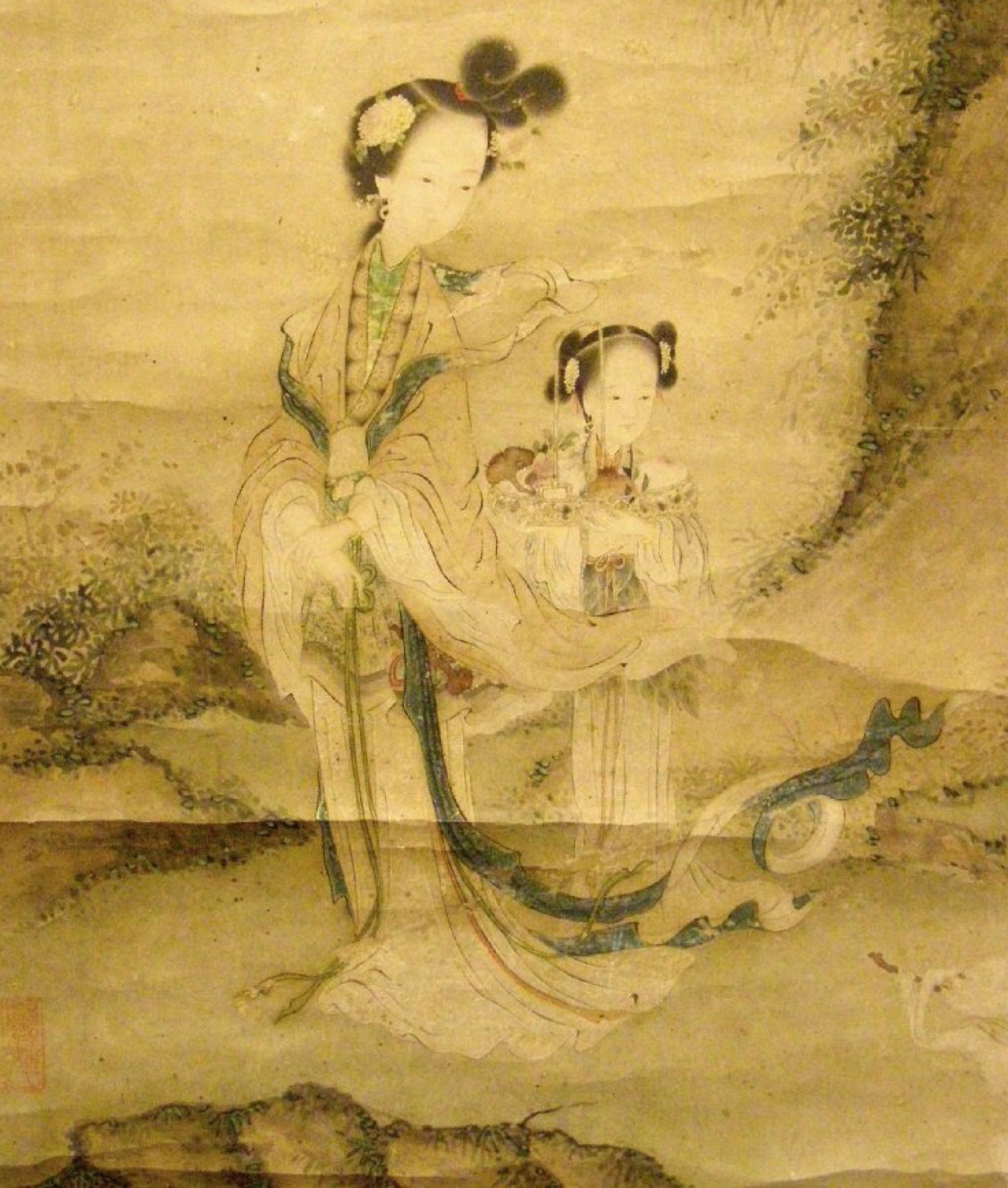
Xiwangmu's earliest appearances, in texts and oracle-bone-adjacent material predating the Han dynasty, describe a fearsome, half-human, half-beast figure associated with plague, punishment, and the tiger — a deity of cosmic law rather than comfort. Over the following centuries her image was steadily refined: by the Han dynasty she had become a serene, regal goddess presiding over Mount Kunlun, a paradise realm at the western edge of the world, attended by female immortals and holding authority over the registers of life and death. Her garden there grows the peaches of immortality, which ripen only once every several thousand years; those who eat them gain eternal life, and her periodic peach banquets, to which deities and favoured mortals are invited, became one of the most durable images in later Chinese art and popular story.
Iconography
A regal woman, often crowned with a distinctive phoenix or feather headdress, holding or seated near a peach branch, sometimes attended by a three-legged bird or a hare pounding the elixir of immortality
Epithet
The Queen Mother of the West
Festival: 3rd day of the 3rd lunar month, traditionally celebrated as her peach banquet
Back to the pantheon
Return to Pantheon, or read the concepts behind these figures.