sacred mountain Jiangxi
Mount Longhu
Dragon-Tiger Mountain, seat of the Celestial Masters
World Heritage Site (2010) — inscribed for its Danxia landform geology; the Taoist temple complex is separately state-protected
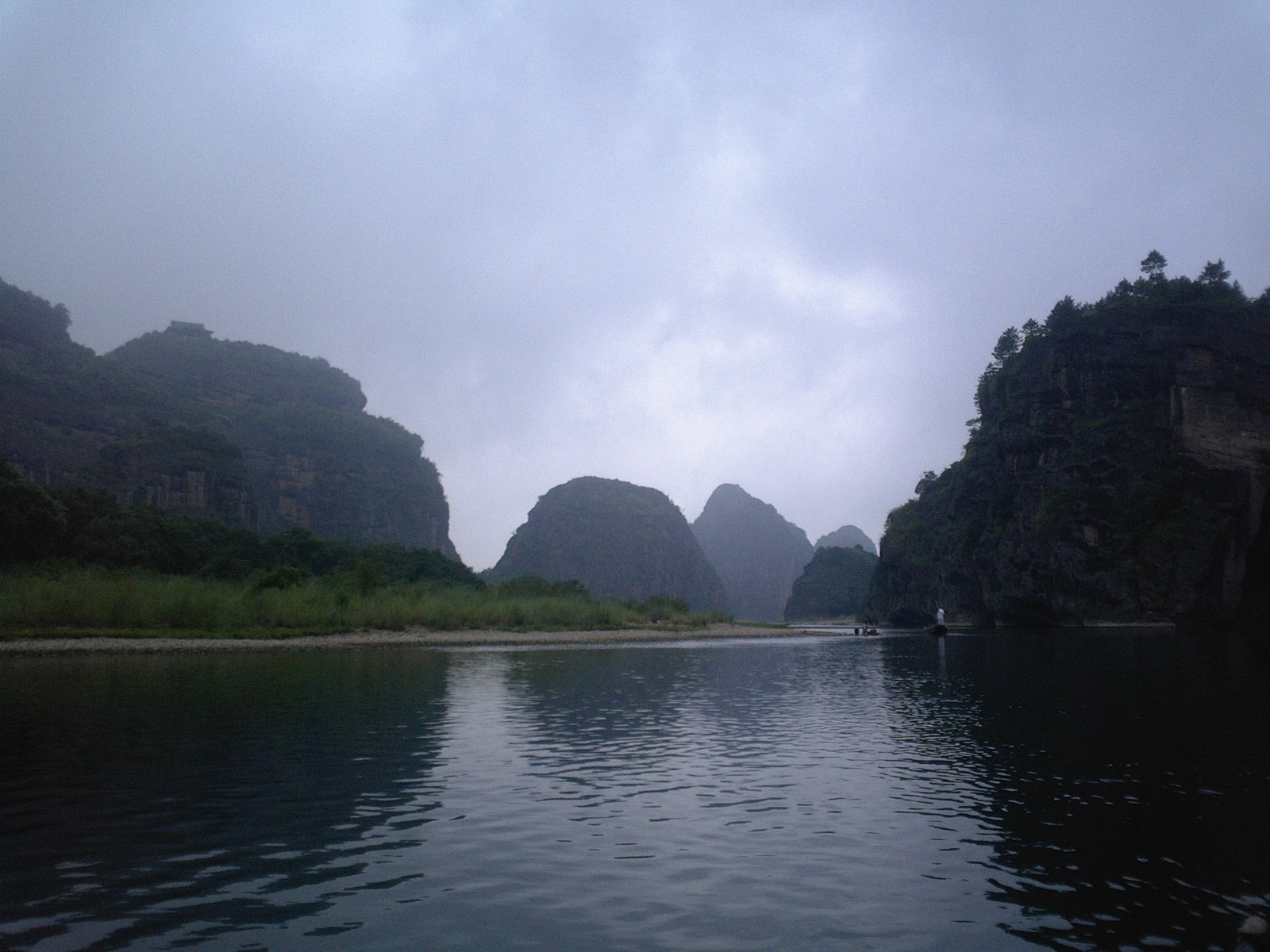
The ancestral mountain of the Zhengyi (Orthodox Unity) tradition, the older and larger of Taoism's two great living branches alongside Quanzhen. Where Quanzhen is monastic and celibate, Zhengyi priests may marry and live among lay communities, and its practice centers on ritual, talismans (fu), and exorcistic rites rather than austere self-cultivation. Longhu Mountain is traditionally the seat of the Zhang family's hereditary Celestial Master (Tianshi) lineage, said to descend unbroken from its 2nd-century founder.
Sacred narrative
The refining of the elixir and the mountain's naming
Zhang Daoling, a Han-dynasty scholar-turned-seeker, is said to have refined an elixir of immortality at this site after years of cultivation; upon the elixir's completion, a dragon and a white tiger appeared over the peaks, giving the mountain its name. He went on to found the Way of the Celestial Masters — the first organized Taoist religious institution — after a revelation from the deified Laozi in 142 CE. The Zhang family's hereditary claim to the title "Celestial Master" is one of the longest continuously claimed religious lineages in the world, and the ancestral temple at Longhu Mountain, the Tianshi Mansion, remains its ceremonial home.
History
Founded Tradition holds that Zhang Daoling refined an alchemical elixir here in the 2nd century CE, after which a dragon and tiger appeared — the mountain's namesake.
Key figures
- Zhang Daoling (founder of the Way of the Celestial Masters)
- The hereditary Zhang family Celestial Masters, 63 generations recorded through the imperial era
Major events
- 2nd century CE: Zhang Daoling establishes the Way of the Celestial Masters at Mount Heming, Sichuan; the lineage later relocates its ancestral seat to Longhu Mountain
- Tang–Qing dynasties: successive emperors grant the Zhang family hereditary religious authority and the title "Celestial Master"
- 1949 onward: the 63rd Celestial Master relocates to Taiwan; Longhu Mountain's temple complex is restored on the mainland from the 1990s
- 2010: UNESCO World Heritage inscription for the Danxia landform
Today
The site as it currently stands.
Regional airport and high-speed rail at Yingtan; the temple complex and Danxia scenic area are separately ticketed
March–May and September–November
Yingtan, Jiangxi
Active Zhengyi priesthood and the restored Tianshi Mansion complex
moderate
Back to the geography
Return to Sacred sites, or read the concepts practised there.