grotto heaven Jiangsu
Mount Mao
Ancestral seat of the Shangqing school
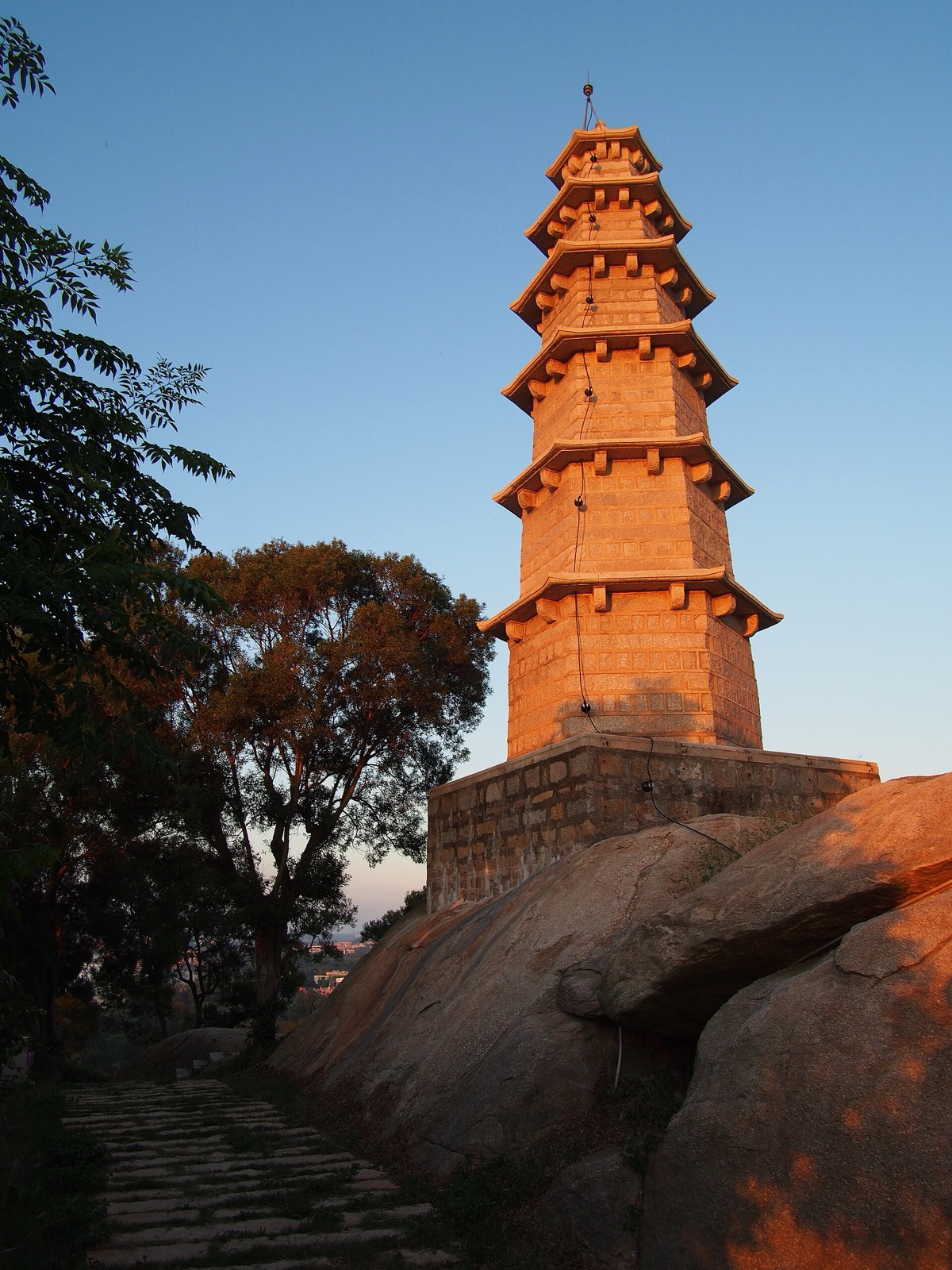
The ancestral mountain of the Shangqing (Highest Clarity) school, named for the "Three Mao Brothers" (Mao Ying, Mao Gu, and Mao Zhong), Han-dynasty cultivators credited with attaining immortality there and after whom the originally-named Jurong Shan was renamed. Under its alternate name Gouqu Shan, Maoshan is traditionally ranked as the eighth of the Ten Major Grotto-Heavens of Taoist sacred geography. Its most consequential resident was Tao Hongjing, the 5th–6th-century scholar-physician-priest who systematised the visionary Shangqing revelations into an organised canon and institutional tradition, making Maoshan the school's enduring institutional home.
Sacred narrative
Tao Hongjing's systematisation of the Shangqing revelations
By the time Tao Hongjing arrived at Maoshan in the late 5th century, the Shangqing revelations transmitted decades earlier to Yang Xi existed as a scattered, only partially organised body of visionary texts. Tao Hongjing — himself a physician, alchemist, and scholar of extraordinary range — gathered, edited, and annotated these materials into the Zhen'gao, a work that preserved not only the revealed scriptures but Yang Xi's own record of his visionary encounters with the Shangqing Perfected Beings, giving later generations a coherent account of both the teaching and its transmission. Tao Hongjing's decision to settle and work at Maoshan, rather than elsewhere, cemented the mountain's status as Shangqing's ancestral seat, a role recognised by the Ten Major Grotto-Heavens tradition that ranks Maoshan (as Gouqu Shan) among Taoism's most sacred cosmic sites.
History
Founded Legendary founding tied to the Three Mao Brothers (Han dynasty); Shangqing revelations to Yang Xi, 364–370 CE; systematised at Maoshan by Tao Hongjing, 5th–6th century CE.
Key figures
- The Three Mao Brothers (Mao Ying, Mao Gu, Mao Zhong)
- Yang Xi, recipient of the Shangqing revelations
- Wei Huacun, the revelations' traditional celestial transmitter
- Tao Hongjing, Shangqing systematiser and compiler of the Zhen'gao
Major events
- Han dynasty: the Three Mao Brothers' legendary cultivation and immortality on the mountain, giving it its name
- 364–370 CE: the Shangqing scriptures are revealed to the visionary Yang Xi
- 5th–6th century CE: Tao Hongjing settles at Maoshan and compiles the Zhen'gao ("Declarations of the Perfected"), establishing the mountain as Shangqing's institutional center
Today
The site as it currently stands.
Road access from Jurong or Zhenjiang; cable car serves the upper temple complex
March–May and September–November
Jurong, Jiangsu; Zhenjiang and Nanjing (nearest major cities)
Active Shangqing-affiliated Taoist clergy resident at the mountain's temples
moderate
Back to the geography
Return to Sacred sites, or read the concepts practised there.