grotto heaven Sichuan
Mount Qingcheng
A birthplace of organised Taoism, paired with the Dujiangyan waterworks
World Heritage Site (2000) — "Mount Qingcheng and the Dujiangyan Irrigation System"
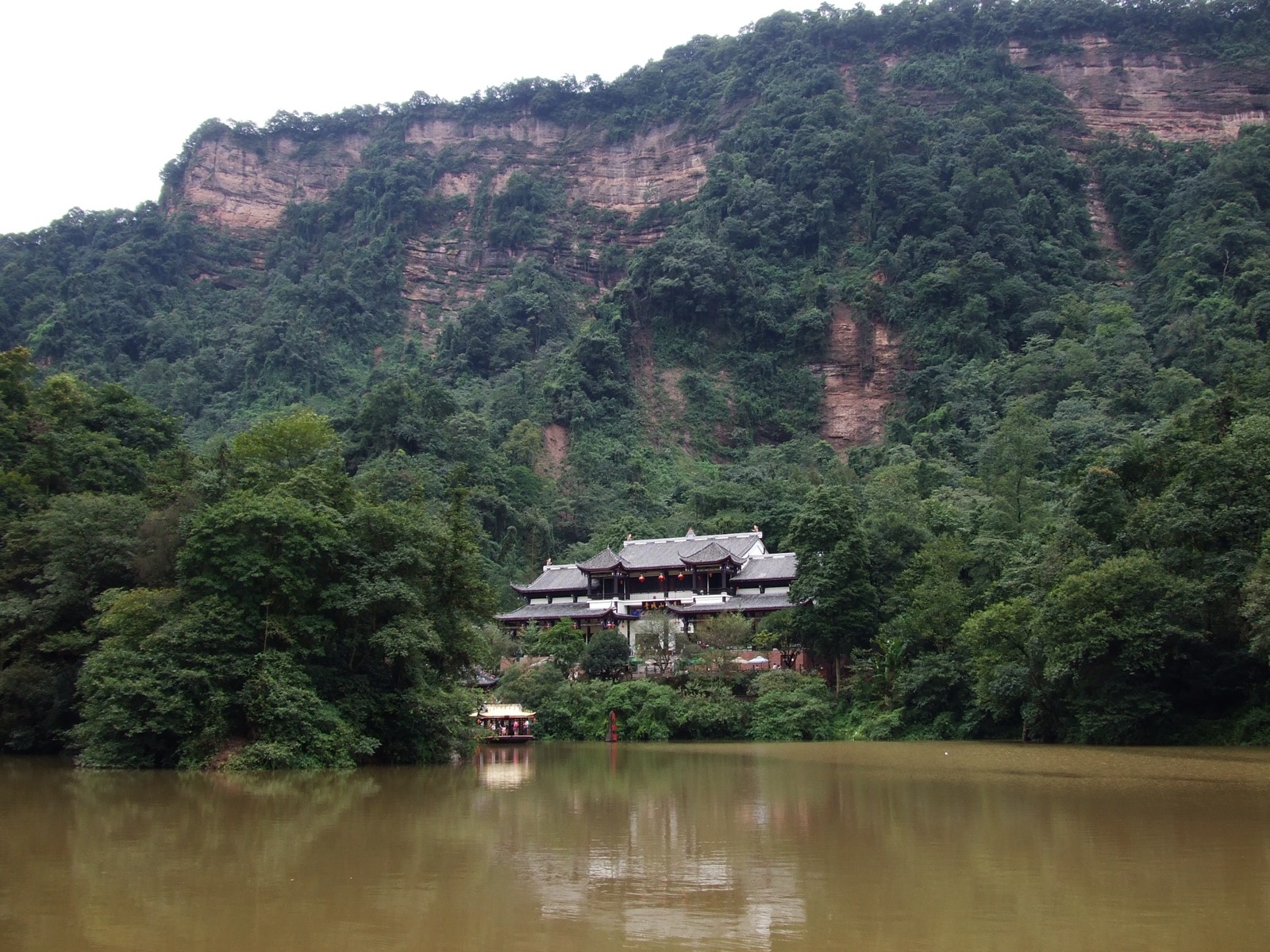
One of the places where organised Taoism first took institutional shape. Tradition holds that Zhang Daoling, having received his founding revelation at Mount Heming elsewhere in Sichuan, later taught, organised his followers, and died at Qingchengshan, where the cave shrine Tianshi Dong (Celestial Master's Cave) still marks the site associated with his residence. The mountain is traditionally ranked as the fifth of the Ten Major Grotto-Heavens (shi da dongtian) of Taoist sacred geography — thickly forested peaks understood as portals to other cosmic realms. In the Tang–Five Dynasties period it was also home to Du Guangting, one of the most important Taoist scholar-priests and liturgists in the tradition's history, who lived, wrote, and is buried on the mountain.
Sacred narrative
Zhang Daoling's teaching at Tianshi Dong
Where Mount Heming holds the moment of revelation — Zhang Daoling's founding encounter with the deified Laozi in 142 CE — Qingchengshan holds the longer arc of what came after: the settled work of organising the Way of the Celestial Masters into a functioning religious community. Tradition places his later residence, teaching, and eventual death at a cave partway up the mountain, now enshrined as Tianshi Dong, one of Qingchengshan's principal pilgrimage sites. The mountain's deep, cypress-shadowed valleys also made it a natural draw for later solitary cultivators, most notably Du Guangting, whose scholarly compilations of Taoist ritual, hagiography, and sacred geography — including catalogues of the very grotto-heavens and blessed lands that number Qingchengshan among them — shaped how later generations understood the whole landscape of Taoist sacred sites.
History
Founded Associated with Zhang Daoling's teaching and death, 2nd century CE; Du Guangting resident in the late Tang and Five Dynasties period (9th–10th century).
Key figures
- Zhang Daoling
- Du Guangting, Tang-Five Dynasties Taoist scholar and liturgist
Major events
- 2nd century CE: Zhang Daoling's later teaching and, by tradition, his death, are placed at Qingchengshan
- 9th–10th century: Du Guangting lives, writes, and is buried on the mountain
- 2000: UNESCO World Heritage inscription jointly with the adjacent Dujiangyan irrigation system
Today
The site as it currently stands.
Cable car and hiking trails from the front-mountain entrance near Dujiangyan; combined tickets often cover both Qingchengshan and the Dujiangyan waterworks
March–May and September–November
Dujiangyan, Sichuan; Chengdu (~1hr by road/rail)
Resident Zhengyi clergy at Tianshi Dong and the summit temples
busy
Back to the geography
Return to Sacred sites, or read the concepts practised there.