city temple Jiangsu
Xuanmiao Guan
A Song-dynasty temple hall at the heart of old Suzhou
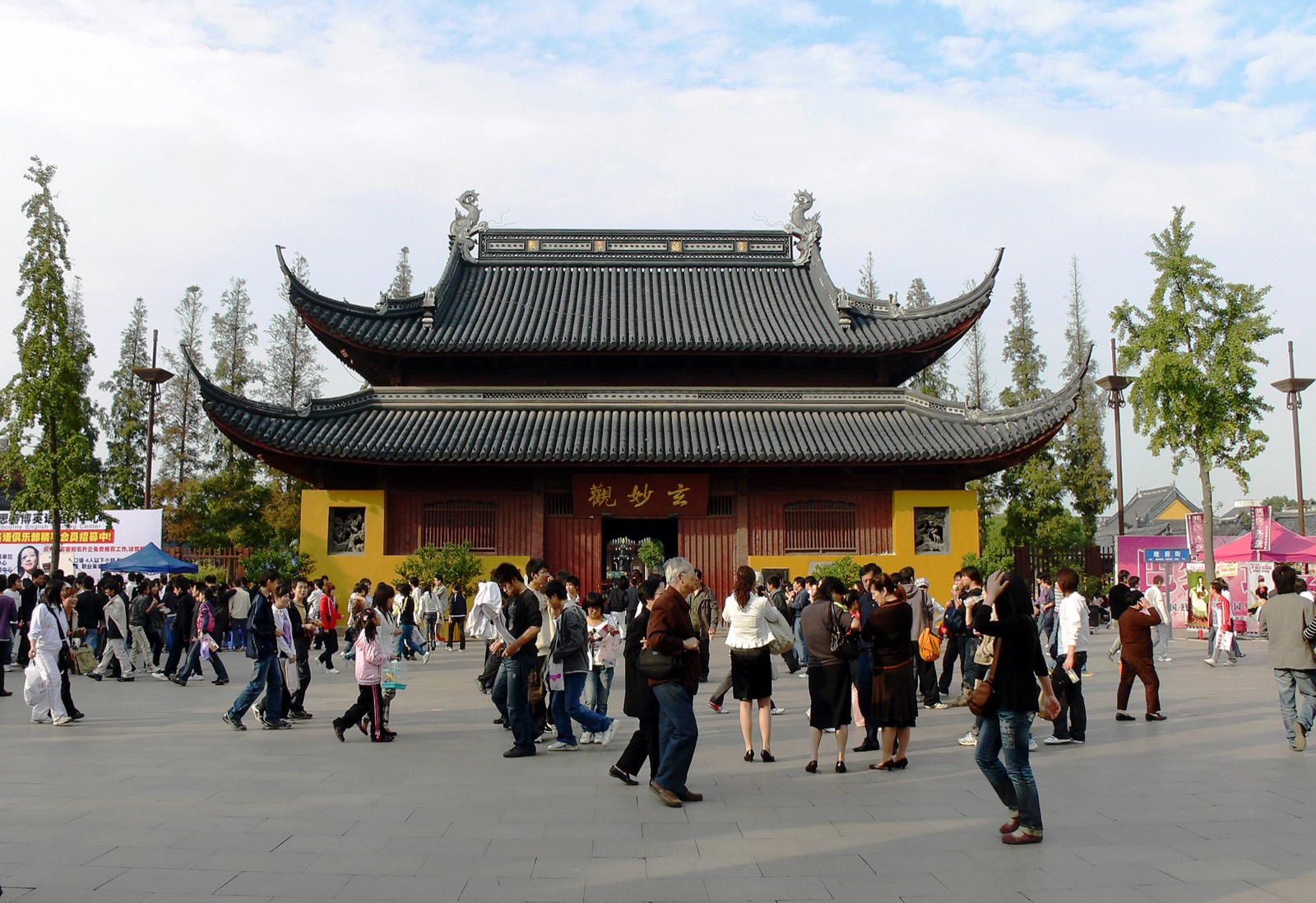
One of the oldest and best-preserved Taoist temple complexes in China, and among the most architecturally important: its main hall, the Sanqing Dian (Hall of the Three Purities), was rebuilt in 1179 CE during the Southern Song dynasty and survives today as one of the largest and best-preserved wooden temple halls of the Song period anywhere in China, a nationally protected cultural relic. The temple sits in the middle of Suzhou's busiest historic pedestrian shopping street, Guanqian Jie ("the street in front of the temple") — a name derived directly from Xuanmiao Guan's presence there for the better part of a millennium.
Sacred narrative
The survival of the Song-dynasty Sanqing Hall
Xuanmiao Guan's significance rests less on a single founding myth than on the sheer continuity of its central building. The Sanqing Dian, rebuilt in 1179 CE after an earlier structure was lost, has survived war, fire, and the repeated destruction that claimed most Song-dynasty wooden architecture elsewhere in China, making it one of the rare places a visitor can stand inside a virtually intact 12th-century Taoist hall. Its scale and construction techniques are studied by architectural historians as a primary reference for Song-dynasty religious building. The hall enshrines the Three Pure Ones — Yuanshi Tianzun, Lingbao Tianzun, and Daode Tianzun (Laozi in his highest deified form) — at the summit of Taoist cosmology, the same trinity enshrined in the principal hall of nearly every major Taoist temple in China, here housed in one of the oldest surviving examples of the building type built to hold them.
History
Founded Founded 276 CE (Western Jin dynasty) as Zhenqing Daoyuan; renamed across dynasties, taking its current name Xuanmiao Guan under the Yuan dynasty in 1295.
Key figures
Major events
- 276 CE: founded as Zhenqing Daoyuan
- Tang dynasty: renamed Kaiyuan Gong
- 1179 CE: the Sanqing Dian main hall rebuilt in its present form during the Southern Song dynasty
- 1295: renamed Xuanmiao Guan under the Yuan dynasty, the name it retains today
Today
The site as it currently stands.
Central Suzhou, on the pedestrianised Guanqian Jie shopping street; open daily with an entrance fee
Year-round; spring (March–May) and autumn (September–November) are most comfortable
Suzhou, Jiangsu
Active resident Taoist clergy maintaining daily ritual life alongside heavy tourist and shopping foot traffic
busy
Back to the geography
Return to Sacred sites, or read the concepts practised there.